
The employee record, and everything hanging off it
One record per person, from the offer to the final settlement — with the leave, the documents and the approvals attached to it rather than filed somewhere beside it. This is the part every other module reads from, and it is included in every plan.
What core hr actually does.
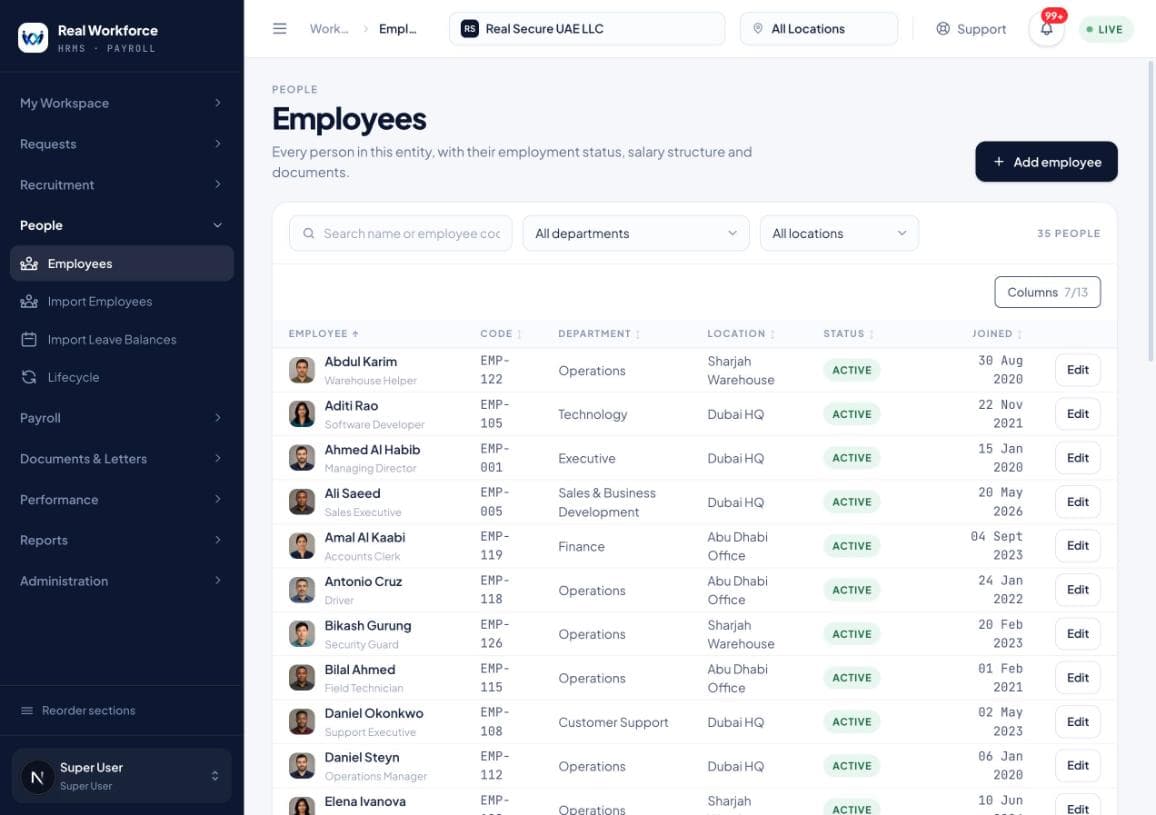
Employees, entities and the shape of the organisation
The record is built for a group rather than a single company. Employees belong to a legal entity; departments, locations and reporting lines sit under it; and a reporting line cannot cross an entity — enforced by the database, not by a rule somebody remembers.
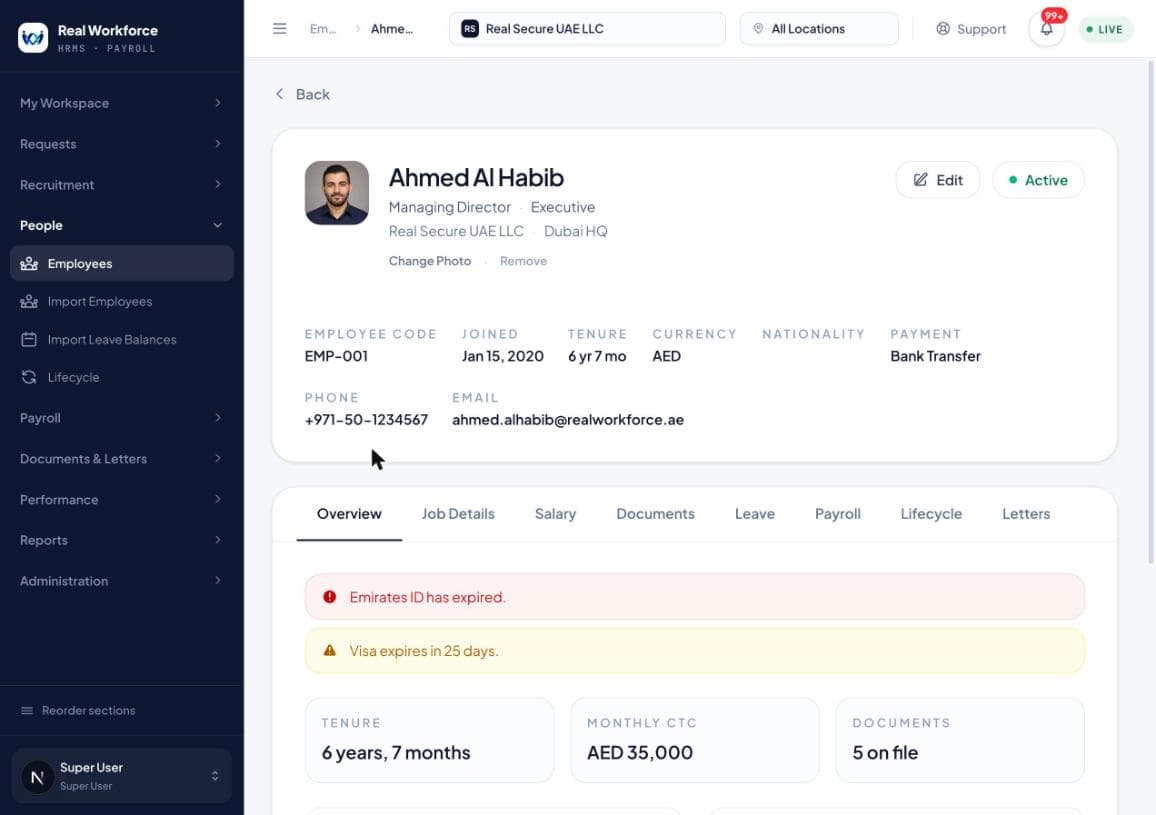
- Personal details, contract, salary structure, bank details and identifiers on one profile
- Departments, locations and grades as maintained lists rather than free text somebody re-types
- Reporting lines that build the org chart and decide who may approve what
- Salary revision history — the figure, the effective date, who approved it
- Onboarding and offboarding checklists, so a joiner or a leaver is a process rather than a memory
- Employee self-service: their own profile, their own documents, their own requests
Leave, accrued the way the law and the policy say
Leave policies are per entity and start from the statutory template for the jurisdiction it operates under, so annual leave, sick leave and the rest arrive configured rather than blank. Requests route to the approver the reporting line names.
- Per-entity policies seeded from the jurisdiction's own template
- Accrual that runs continuously, so a balance is current when somebody opens it
- Requests, approvals, rejections and cancellations, each with a name and a date against them
- Holiday calendars and working weeks per entity
- Balances that feed the payroll run and the final settlement rather than being re-keyed into them
Documents and letters, generated from the record
Salary certificates, NOCs, experience letters and employment confirmations are produced from the employee's own data against a template your HR team controls — so the name, the salary and the dates on the letter are the ones in the system.
- A template library you edit, with your letterhead and your wording
- Employees request a letter; HR resolves it; the issued copy stays on the record
- Document storage against the employee — passport, visa, Emirates ID, contract, certificates
- Expiry dates tracked, so an expiring visa is a list rather than a surprise
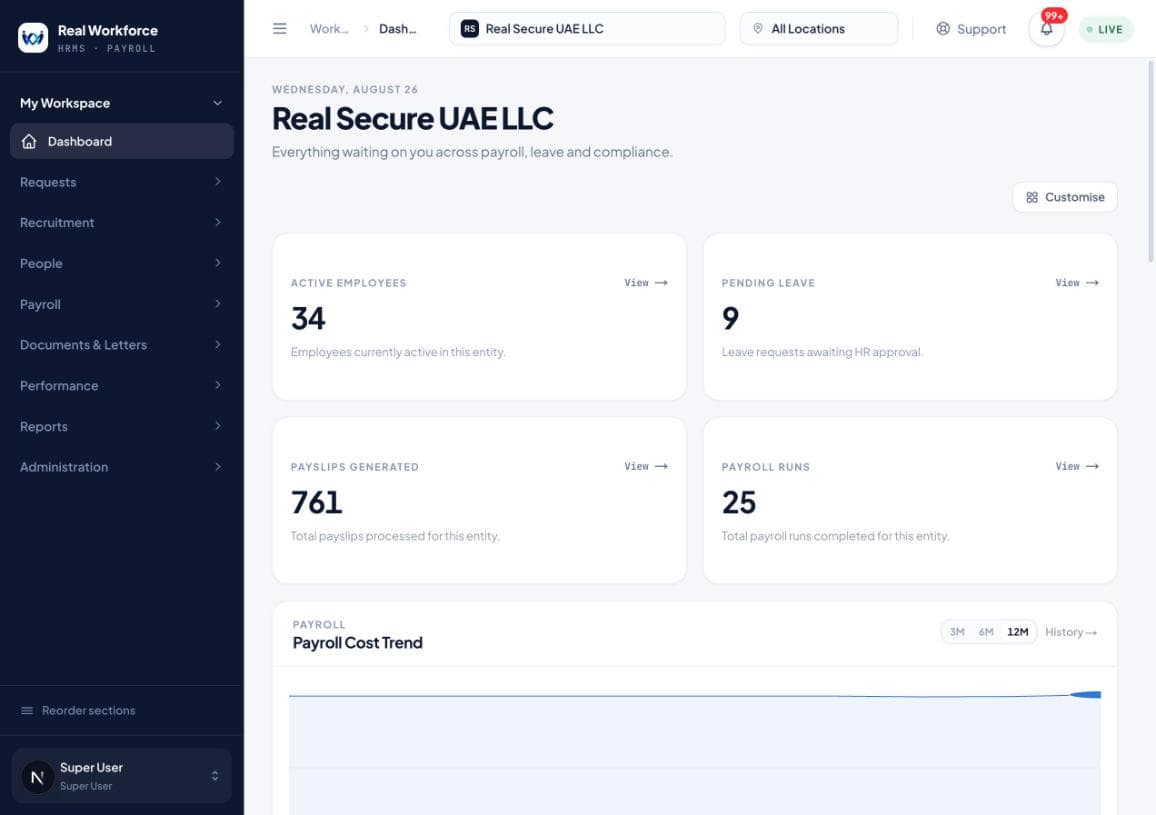
What it looks like.
Captured from a running system, not drawn for this page.
What each tier includes, from the live price list.
This table is read from the same plan catalogue the billing system enforces, so it cannot disagree with what your subscription actually allows. Ceilings and prices are on the pricing table.
| Capability | Starter | Professional | Premium | Enterprise |
|---|---|---|---|---|
| Employees, entities and the shape of the organisation | Included in Starter | Included in Professional | Included in Premium | Included in Enterprise |
| Leave, accrued the way the law and the policy say | Included in Starter | Included in Professional | Included in Premium | Included in Enterprise |
| Documents and letters, generated from the record | Included in Starter | Included in Professional | Included in Premium | Included in Enterprise |
Prices, employee ceilings and monthly allowances are on the pricing table. Enterprise is quoted against your group rather than published.
What this does not do.
Worth an awkward paragraph here rather than an awkward call in month two.
- There is no mobile app yet. The web application works on a phone; a native app is designed and not built.
- Document storage is space on your plan, not an unlimited archive — the allowance is on the pricing table.
Straight answers.
Can a manager see their team's salaries?+
Only if you give them a role that says so. Pay and bank details are encrypted and shown to the roles you authorise; approving leave and seeing compensation are separate permissions, and a manager can have the first without the second.
We run three companies. Is that three subscriptions?+
No. Legal entities live inside one workspace, and the number your plan allows is on the pricing table. Employees, payroll and leave are scoped per entity, and reporting lines cannot cross between them.
Every other part of the product.
Half an hour, your numbers, no slides.
Tell us how this runs for you today. We will show you the same process here and be honest about what it would take to move.